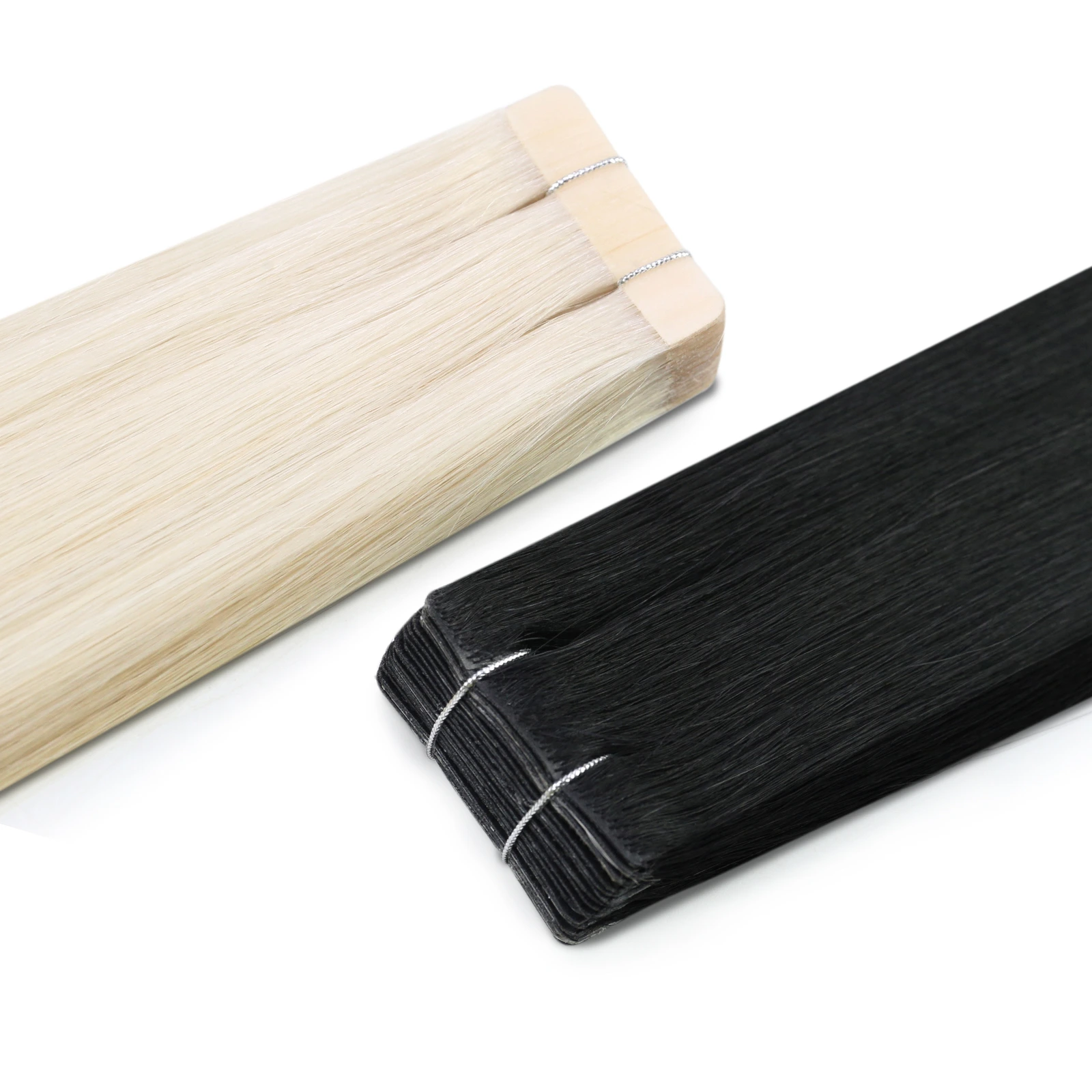
At Full Shine, we offer tape-in extensions in lengths from 10” to 24”, with different weights:
10” & 12” = 30g per pack
14” to 24” = 50g per pack
Since longer extensions distribute the same weight over more hair, they can feel thinner. That’s why choosing the right number of packs is key to avoiding the dreaded “Why does my hair still look flat?” moment.
1. Just Adding Thickness (No Extra Length)
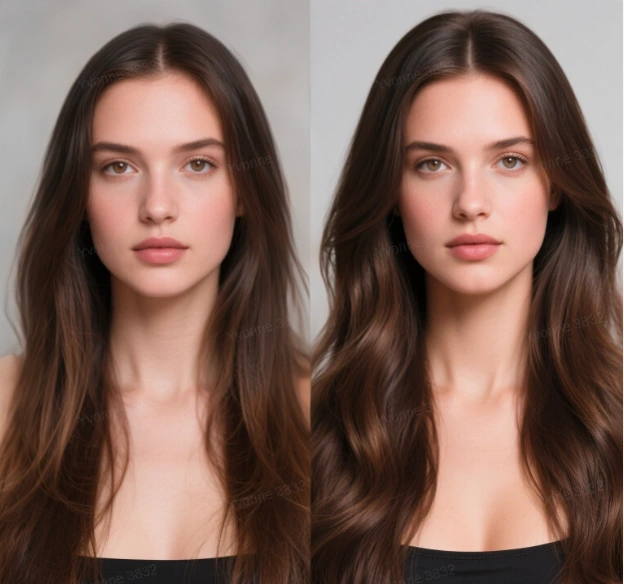
If you love your current length but want fuller, thicker hair, here’s tape in extensions how many packs you’ll need based on your natural hair density:
| Hair Length | Fine Hair | Medium Hair | Thick Hair |
|---|---|---|---|
| 10” – 12” | 1-2 packs | 2 packs | 2-3 packs |
| 14” – 18” | 1 pack | 1-2 packs | 2 packs |
| 20” – 24” | 1-2 packs | 2 packs | 2-3 packs |
Standard salon protocols for a ‘Full-Head’ transformation typically require 150g to 250g of hair. Full Shine’s packaging is calibrated to these standards: our 50g packs allow for modular density building. For fine-haired clients, adhering to a lower total weight (under 150g) is a safety measure supported by the International Hair Extension Standard to protect delicate roots.
- Short extensions (10”-12”) are lighter (30g), so you’ll need more for fullness.
- Medium extensions (14”-18″) are denser (50g), so fewer packs can still add volume.
- Long extensions (20”-24″) are denser (50g), so fewer packs can still add volume. The same weight, the longer the hair, the thinner the hair
Pro Tip: If your hair is very fine, lean toward the higher end of the range for a seamless blend.
2. Adding Both Length AND Thickness
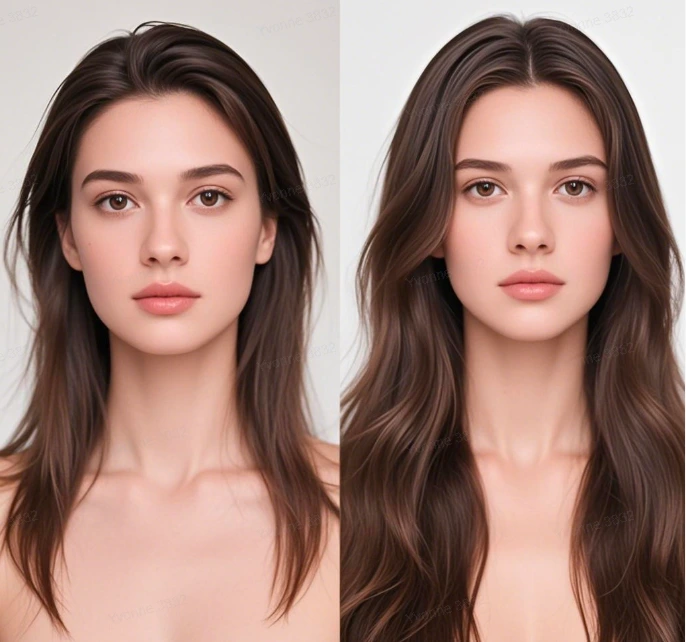
If you’re going for longer + fuller hair, you’ll need more tape-ins to maintain density. Here’s the magic number:
| Hair Length | Fine Hair | Medium Hair | Thick Hair |
|---|---|---|---|
| 10” – 12” | 2 packs | 2-3 packs | 3 packs |
| 14” – 18” | 1-2 packs | 3 packs | 3-4 packs |
| 20” – 24” | 2-3 packs | 3-4 packs | 4-5 packs |
Why More Packs?
Longer hair naturally spreads out the same amount of hair, making extensions appear thinner. More packs = more density + better blending.
Pro Tip: If you’re going super long (20”+), consider layering—use a mix of lengths for a natural, cascading effect.
3. What If You’re In Between?
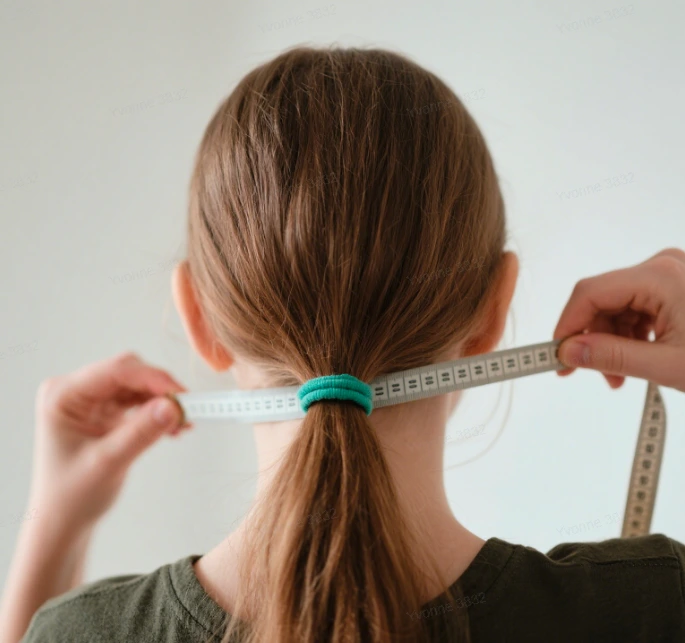
Not sure if you’re fine, medium, or thick-haired? Try the Ponytail Test:
- Pull your hair into a ponytail.
- Measure the circumference:
- < 2 inches = Fine
- 2-3 inches = Medium
- > 3 inches = Thick
The Ponytail Circumference Test is a clinically recognized method for categorizing hair density. Research indicates that a circumference under 2 inches (5cm) signifies ‘Low Density’ hair, which requires narrower placement patterns to ensure the tape tabs remain invisible under thin layers of natural hair.
Still unsure? Start with the largest quantities first—you can return the rest!
Contact Us
Scientific References & Industry Standards:
- Hair Density Metrics: Based on the Ponytail Circumference Measurement established by cosmetic scientists to determine hair mass index. World Trichology Society
- Tension Safety: Our weight recommendations (30g-50g per pack) adhere to the 1:1 Tension Rule to prevent stress on hair follicles, as documented in the Journal of Dermatological Treatment. PubMed – Traction Alopecia and Extensions
- Application Protocol: We follow the Modular Volume Strategy used in high-end salons, ensuring that extension weight is evenly distributed across the Occipital and Parietal regions of the scalp. Professional Beauty Association (PBA)
- Further Reading: For more on hair health and extension safety, consult the American Academy of Dermatology (AAD) regarding hair styling practices.


