Hiding tape-in extensions requires a strategic anatomical placement that respects the “perimeter safety zone.” To ensure 100% invisibility, bonds must be placed at least 1.5 to 2 inches (3.8–5cm) away from the natural hairline and part lines. Utilizing Injection Tape-Ins for the crown and maintaining a 1:1 sectioning ratio prevents the common “staircase” effect and ensures the adhesive tabs remain undetectable even during high-movement activities.


Want completely undetectable tape-in extensions? Learn how to hide tapes for a seamless, flat look with pro styling tricks and video tutorials!
Why Do Tape-In Extensions Sometimes Show?
Even the best tape-ins can become visible if:
- Installation is too close to the roots (bulkiness)
- Your natural hair is fine/thin (less coverage)
- Tapes are too wide for your hair density
- Styling doesn’t account for layering
The good news? A few simple fixes can make them 100% invisible.

5 Ways to Hide Tape-In Extensions Perfectly

1. The “Cross-Weaving” Installation Trick
(Best for fine/medium hair)
✅ How it works:
- Section Hair Horizontally – Work in 1-inch layers from nape upwards
- Alternate Tape Placement – Install first tape ½ inch left of center, next ½ inch right
- Maintain ¼-Inch Gaps – Prevents bulky stacking
- Blend With Top Layer – Leave out the top ½ inch of natural hair
Hide Tape-In Extensions
2. Use a Flat Tool to Press Tapes Flush
- After placing the tape sandwich, press firmly with your fingers to make initial contact.
- Use a flat tool—such as a professional tape press tool—to squeeze the tapes together.
- Apply gentle but consistent pressure along the entire length of the tape to remove any air pockets.
- Double-check at the roots by feeling with your fingertips—if you feel a ridge, press again until the bond is completely flush.

3. Strategic Teasing for Maximum Coverage
Teasing—when done strategically—creates a natural cushion of hair to cover tapes in areas where they’re most likely to show, such as the crown or near a part.


- Identify potential exposure zones—often at the crown and parting line.
- Lift a small section of hair above the tapes, leaving about ½ inch at the root.
- Lightly backcomb the root area with a fine-tooth comb using short, gentle strokes.
- Smooth the top layer with a boar bristle brush so the teased hair underneath stays hidden.
- Style as desired—soft waves can further disguise the tapes.
Hide Tape-In Extensions
4. Match Your Hair Color Precisely
Color matching plays a major role in making extensions invisible. Always select a shade that matches your mid-lengths and ends—not just your roots.
- If you’re between two shades, go for the lighter option and tone if necessary.
- Match in natural daylight for the most accurate results.
- Consider balayage or rooted extensions for a blended look if your hair has highlights.
A precise color match minimizes contrast between natural hair and extension bonds, making them harder to detect.


5. Maintain Regularly for a Fresh Look
Even the most careful install can show as the extensions grow out. Every 6–8 weeks, schedule a removal and reinstallation to keep tapes close to the scalp.
At-home care:
- Use sulfate-free shampoos to protect the adhesive.
- Avoid applying conditioner directly on the bonds.
- Gently brush daily to prevent tangling and keep coverage smooth.
3 Mistakes That Make Tapes More Visible
❌ Installing when hair is dirty (oils prevent flush adhesion)
❌ Using heavy serums near tapes (causes slippage → bulging)
❌ Skipping the “tap test” (gently tap scalp—if you hear plastic, reposition!)
Related Products
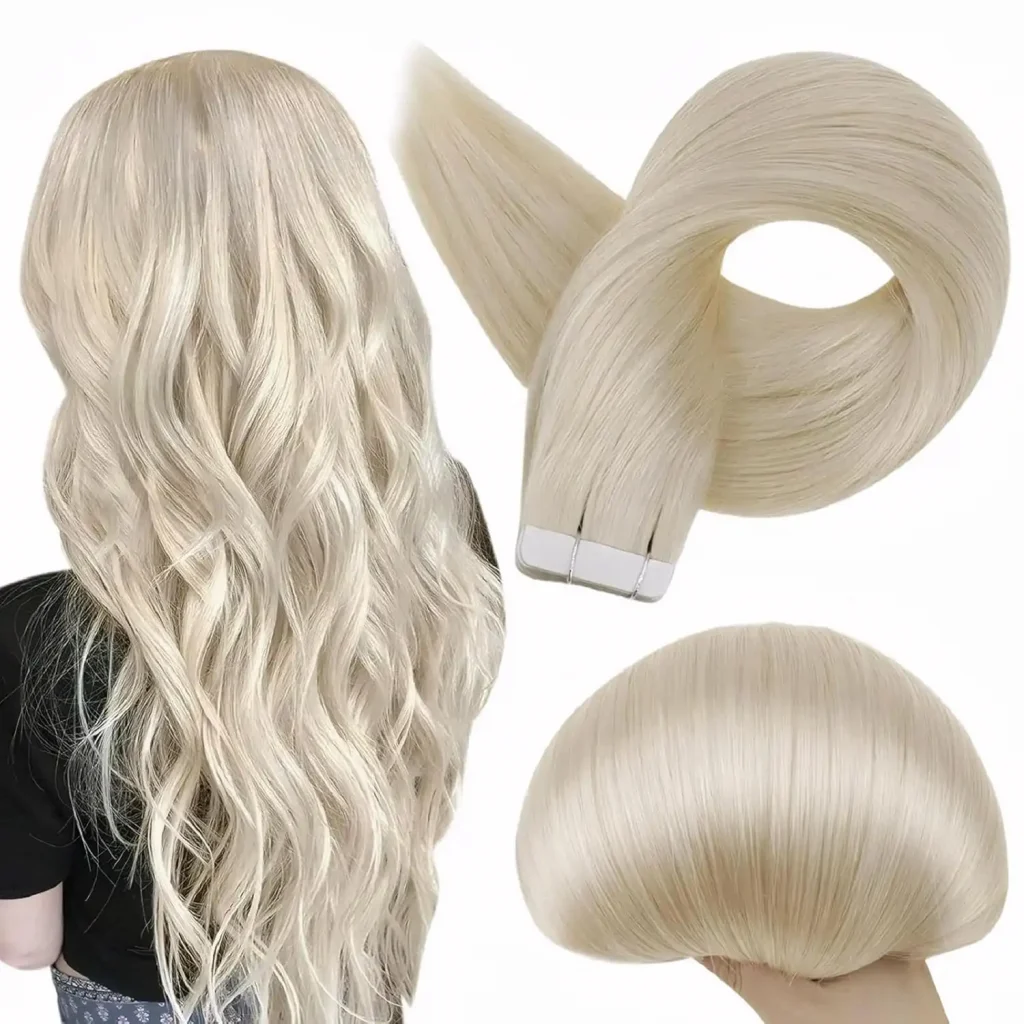
Tape in Hair Extensions
Injection Virgin Tape Ins
Replacement Tapes
Have more questions about how to hide tape in extensions?
Related articles

Technical Standards & Industry References:
- Milady Standard Cosmetology: Standardized protocols for the geometric placement of hair enhancements.
- Professional Beauty Association (PBA): Best practices for seamless hair extension integration and client comfort.
- Modern Salon Media: “The Geometry of Invisibility: How to Map the Scalp for Tape-In Extensions.”
- International Journal of Trichology: Research on the impact of weight distribution and placement on long-term follicle health.


