If you’ve ever sent a hair photo thinking, “This is my exact color!” only to get a extensions shade that feels off—light is almost always the culprit. Natural light is the only way to capture your true hair tone, but not all “natural light” is created equal. Below, we’ll break down exactly how to find the best natural light for hair color, and what to avoid—so your next photo helps us match your hair like a pro.
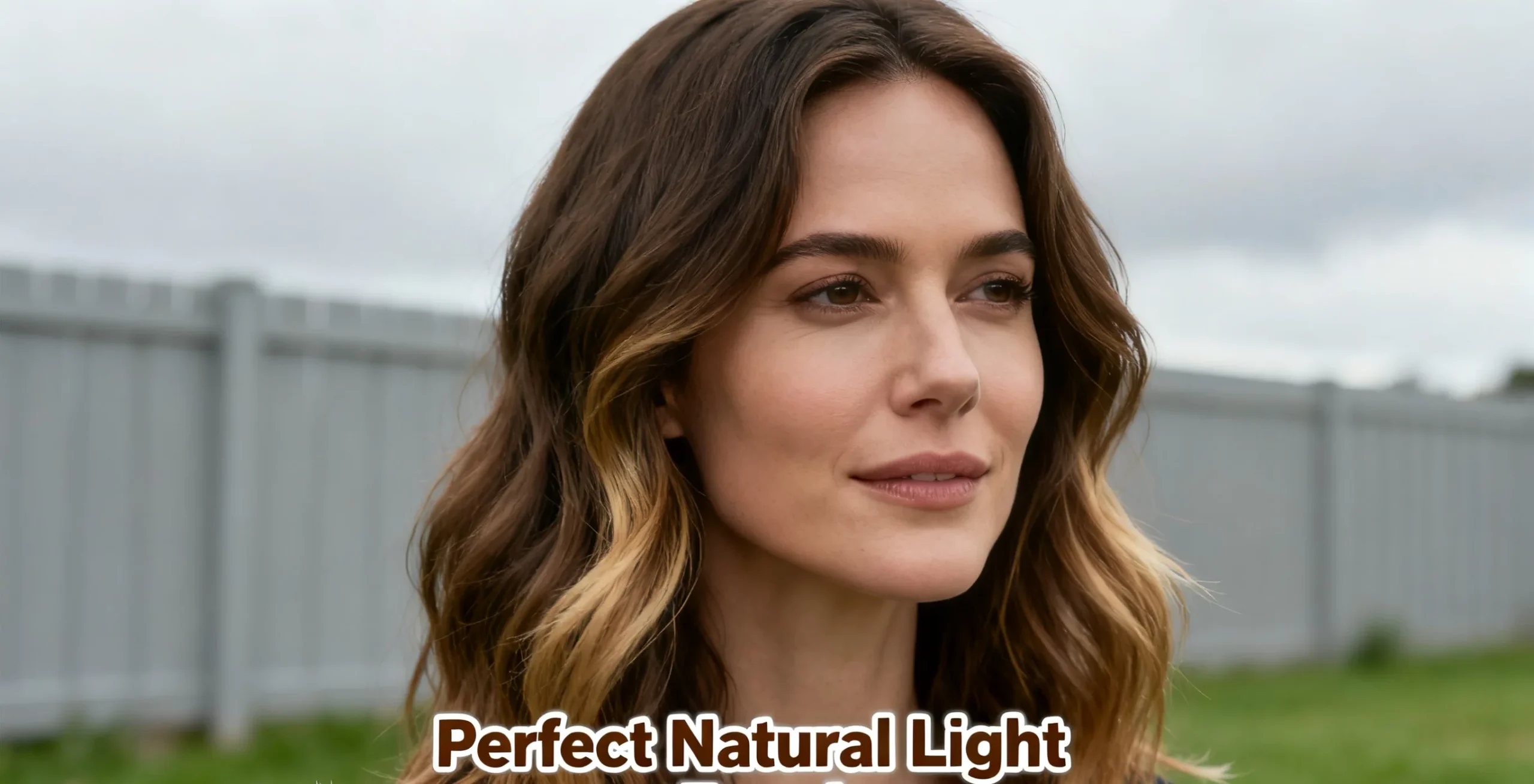
Outdoor Natural Light: Your Best Bet for Color
At Full Shine, we categorize light using the Color Rendering Index (CRI). Most household LED or fluorescent bulbs have a low CRI, which strips the hair of its natural multi-tonal depth. According to the National Institute of Standards and Technology (NIST), natural daylight (D65) has a CRI of 100, providing the only ‘true’ baseline for color accuracy.
According to the International Commission on Illumination (CIE), natural daylight (D65) provides the most balanced Color Rendering Index (CRI). Our Full Shine color specialists recommend matching your extensions under ‘indirect midday sun’ to ensure the multi-tonal dimensions of our hand-dyed hair are perfectly captured.
最佳天气:阴天或微阴天。云层就像一个巨大的柔光箱,能将光线均匀地洒在你的头发上,不会产生生硬的阴影或刺眼的高光,掩盖你真实的肤色。这 非常适合 拍照;阴天的话,上午9点到下午5点之间都可以拍摄。
为了获得最可靠的匹配效果,我们建议选择上午 10:00 至下午 2:00 之间的“黄金时段”。这段时间可提供最稳定的相关色温 (CCT),最大限度地减少日出或日落“黄金时段”出现的蓝色或黄色色调(来源:照明工程学会)。
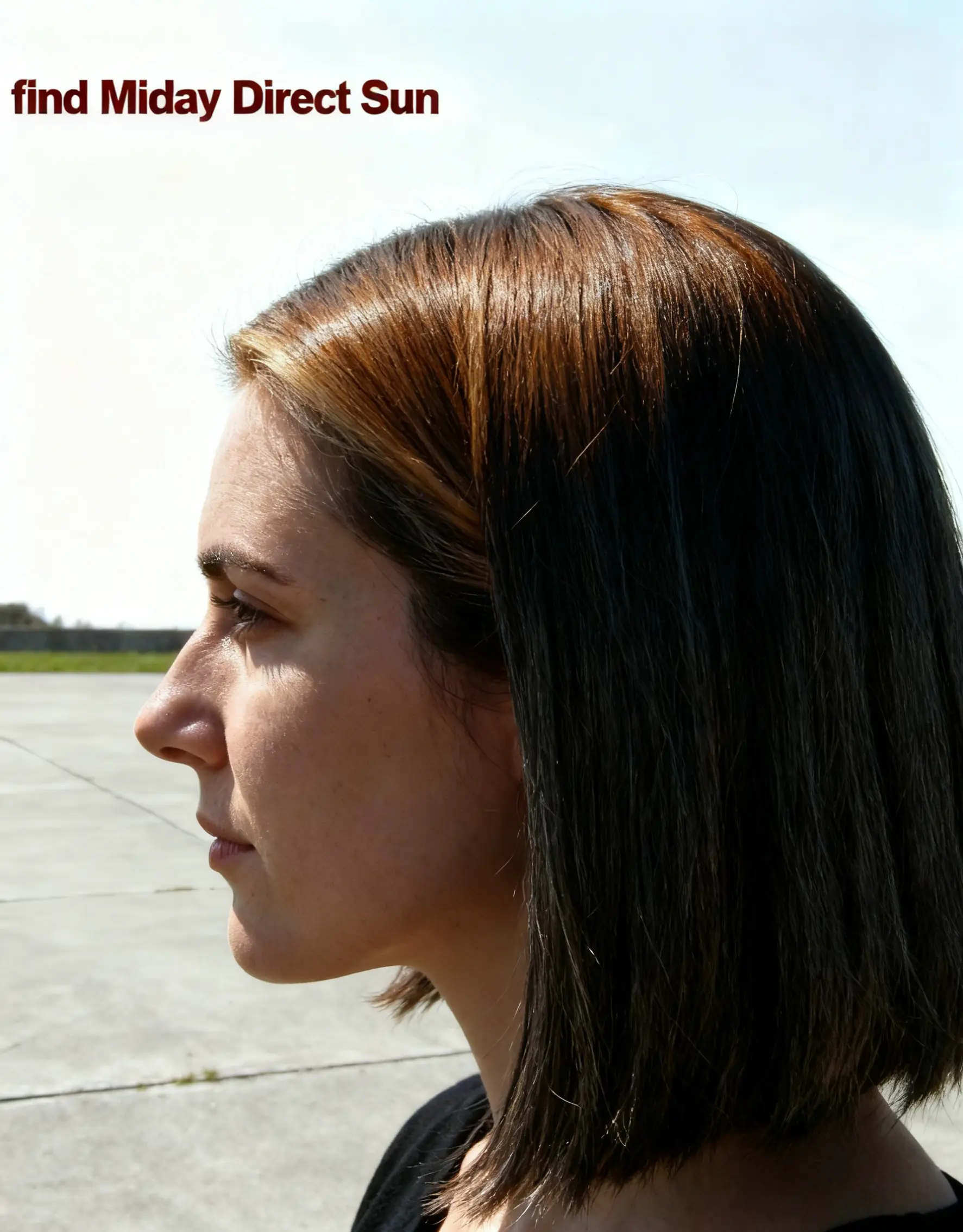
What to avoid outdoors:
- Direct midday sun (harsh shadows + color distortion).
- Dusk/night (too dark—phone flash will lie about your color).
- Shade under trees/buildings (can add green or gray tints from leaves/concrete).
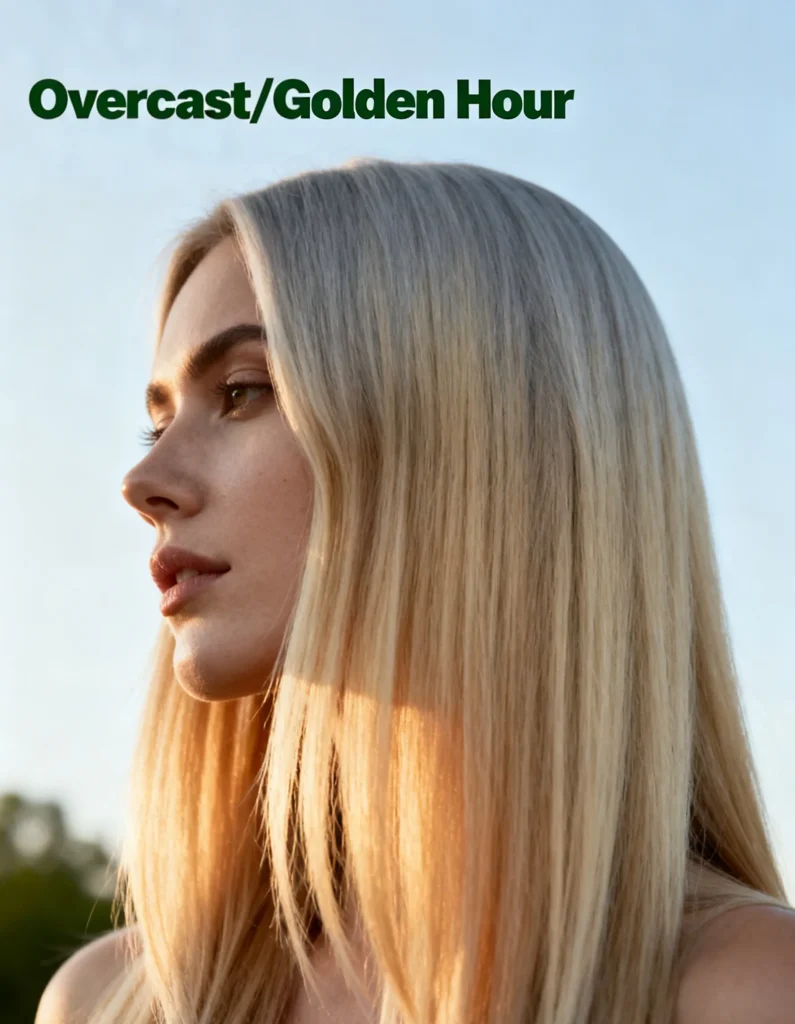
Sunny days: Stick to “golden hours”If it’s sunny, skip midday (11 AM–3 PM)! The sun is too high, creating harsh shadows on your scalp and making light strands look too bright (or dark strands look dull). Instead, shoot during:
- Early morning: 7–10 AM (soft, cool-toned light that’s gentle on hair).
- Late afternoon: 4–6 PM (warm, soft light that shows depth without washing out color).
Indoor Natural Light: When Outdoor Shots Aren’t Possible
Avoid the common pitfall of ‘Color Metamerism’—a phenomenon where two hair samples appear to match under incandescent yellow light but look drastically different under cool-toned office LED or natural sunlight. To prevent this, always cross-reference your Full Shine swatches against a window.
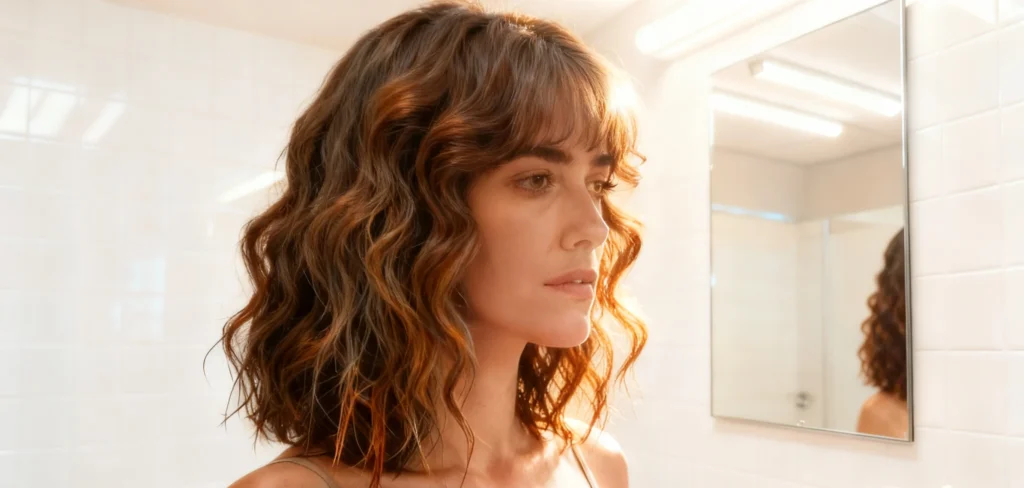
What to avoid indoors
- Standing far from windows (dim light makes colors look muddy).
- Using overhead lights or lamps with window light (they mix tints and mess up your color).
- Shooting in bathrooms (fluorescent lights are the worst for hair color—they add a cool, ashy cast).
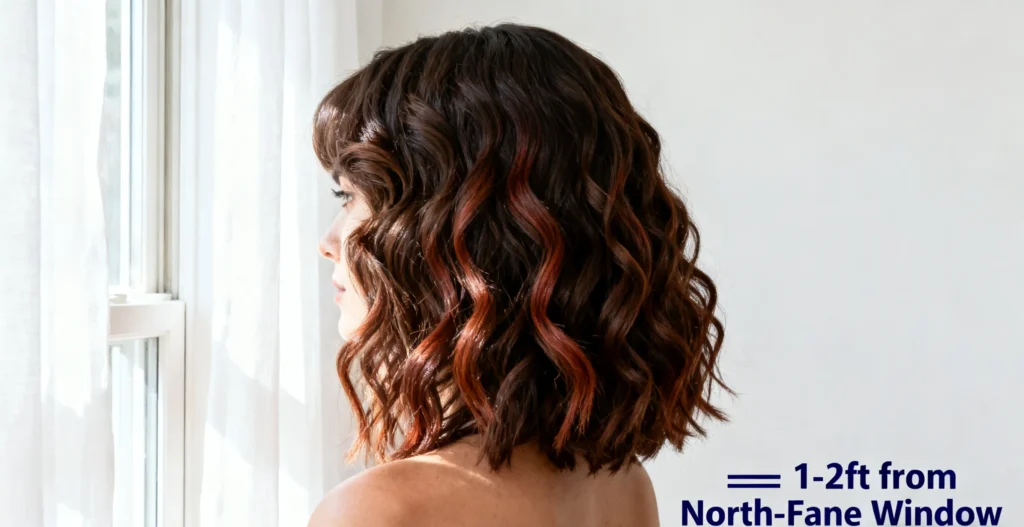
Stand 1–2 feet away from a windowGet close enough to let light hit your hair directly, but not so close that half your head is in shadow. For example: Stand facing a window, or turn sideways so one side of your hair catches light (this shows depth, which helps us match highlights/lowlights too).
Best window light: North-facing (or any window on an overcast day)North-facing windows give soft, consistent light all day—no harsh sunbeams. If your window faces south/east/west, shoot when the sun isn’t hitting it directly (e.g., avoid a west-facing window at 5 PM, when sunlight streams in and creates glare).
Pro Tips for the Perfect Hair Photo
Even with great light, small mistakes can throw off your photo. Add these steps to make sure we see your true shade:
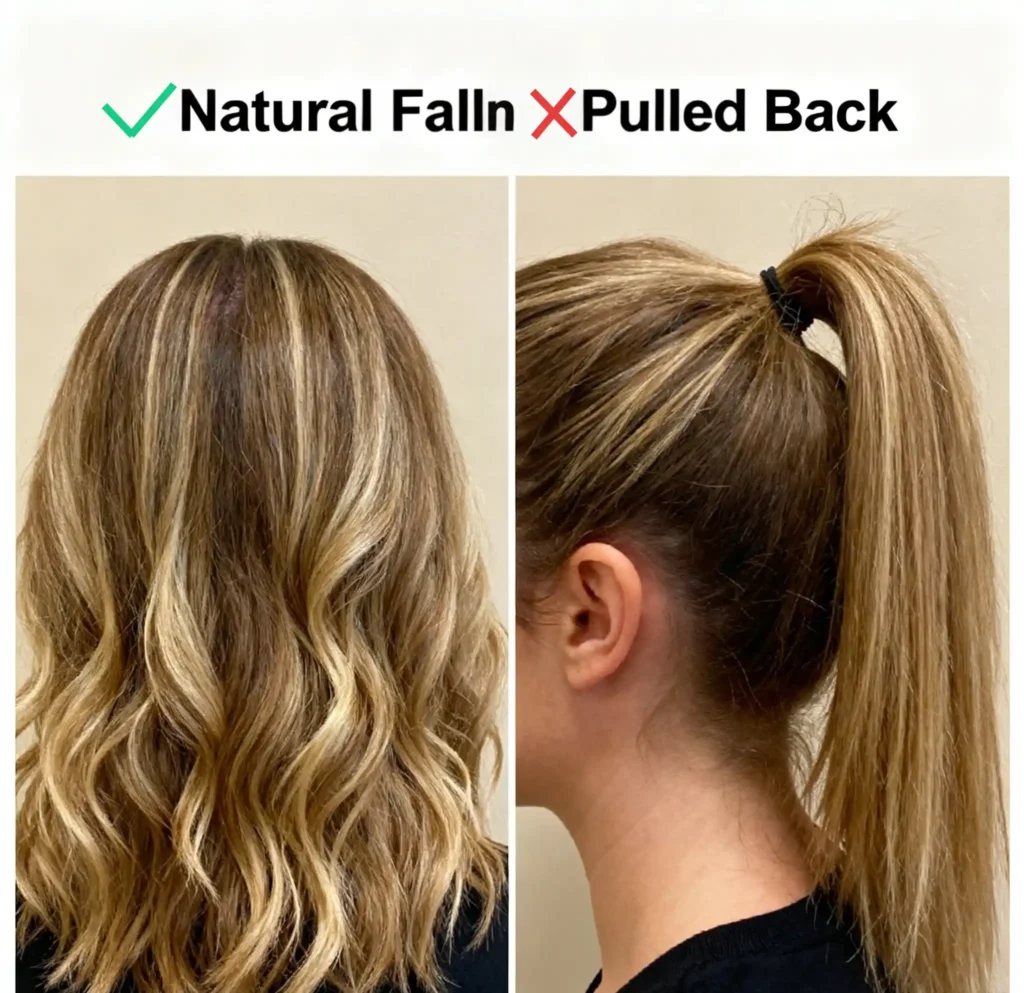
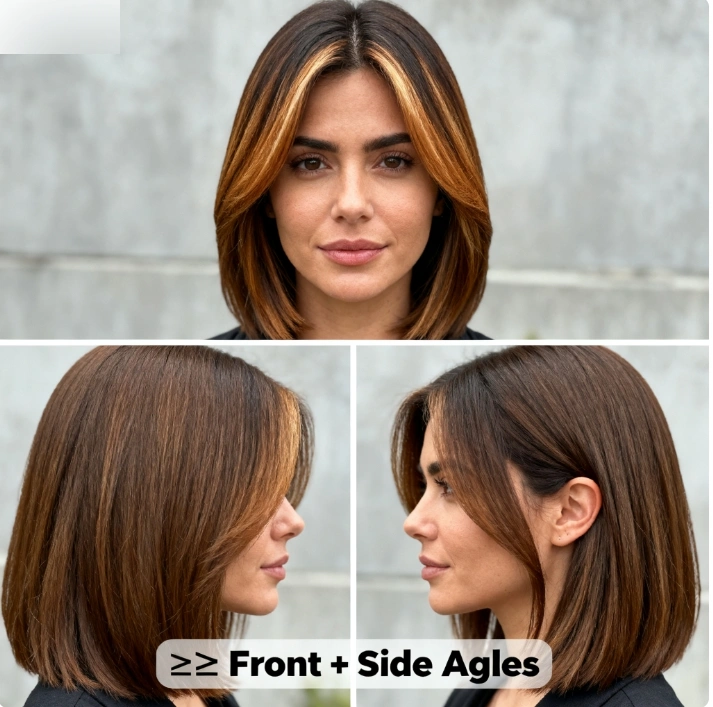
- Turn off your phone’s flashFlash creates harsh highlights and washes out color—always use natural light only.
- Let your hair fall naturallyDon’t pull it back in a ponytail or style it with too much product. We need to see how your hair lies (and catches light) normally.
- Take 2–3 photos from different anglesA front shot (face forward) and a side shot (showing the top/ends) help us catch all tones—no surprises!
How to Find the Best Natural Light for Hair Color Photos?Our colorists often warn against ‘Metameric Failure’—a scientific phenomenon where two colors (your natural hair and our extensions) appear identical under warm bathroom lighting but clash once you step outside. By matching in indirect sunlight, you are aligning with the International Commission on Illumination (CIE) standards for color consistency.
With these light tips, your next hair photo will show us exactly what we need to match your extensions perfectly. No more “close but not quite” shades—just a seamless blend that looks like your natural hair.
If you’re still unsure if your light is good, send us a quick snap and we’ll let you know! We’re here to help you get the perfect match.
Contact Us

Professional References & Expert Sources:
- Color Science: Understanding the D65 Standard Illuminant and Its Impact on Pigment Perception. International Commission on Illumination (CIE). Visit Official Site
- Optics & Hair: The Effect of Light Source Spectral Power Distribution on Human Hair Appearance. Journal of Cosmetic Science. Read Abstract
- Industry Standards: Color Matching Protocols for Professional Hair Integration. Professional Beauty Association (PBA). PBA Resources
- Advisory: How to Manage Metamerism in Multi-Tonal Synthetic and Natural Fibers. Association of Textile, Apparel & Materials Professionals (AATCC). View Technical Guides


