The primary appeal of Butterfly Weft is their ultra-slim, breathable design that promises a near-invisible finish. However, even the most innovative hair extension can feel stiff or look bulky if the placement isn’t precise. Achieving that coveted “zero-gravity” feel isn’t just about the product—it’s about understanding the geometry of the head and the tension of the install. In this guide, we’ll move beyond the basics to show you the professional placement strategies that eliminate discomfort and ensure your extensions blend flawlessly with natural hair movement.
Prioritize Natural Head Shape During Installation
The skull is round, so the installation shouldn’t be straight.
Many instances of a “hard” feeling after installation are due to the hair weft being forcibly installed in a straight line, instead of following the natural curve of the head.
The Arc Technique for Butterfly Weft Conformity
Why Curving the PU Strip Enhances Comfort
The Pinky Test: Checking for Proper Tension
Strategic Placement: Avoiding Sensitive Hairline Edges
Avoid sensitive areas to ensure a physically “undetectable” feel.
The feeling of a foreign object often comes from the hair extensions being too close to the hairline, or being installed too thickly in the most sensitive areas of the scalp (such as behind the ears).
- Distance is Key: Ensure the edge of the hair extensions is at least 2 inches (approximately 5 cm) away from the hairline.
- The Ponytail Test: Before completing the installation, simulate tying a ponytail. If the client feels stinging or pulling at the edges, it means the placement is too far forward.
- Ear Clearance: Avoid the nerve-rich area above the ears; shifting the extensions slightly backward or upward can significantly reduce pressure when sleeping on your side.
Mastering Tension: Why You Shouldn’t Pull Too Tight
Overly tight stitching is the number one cause of “hardness” and scalp discomfort.
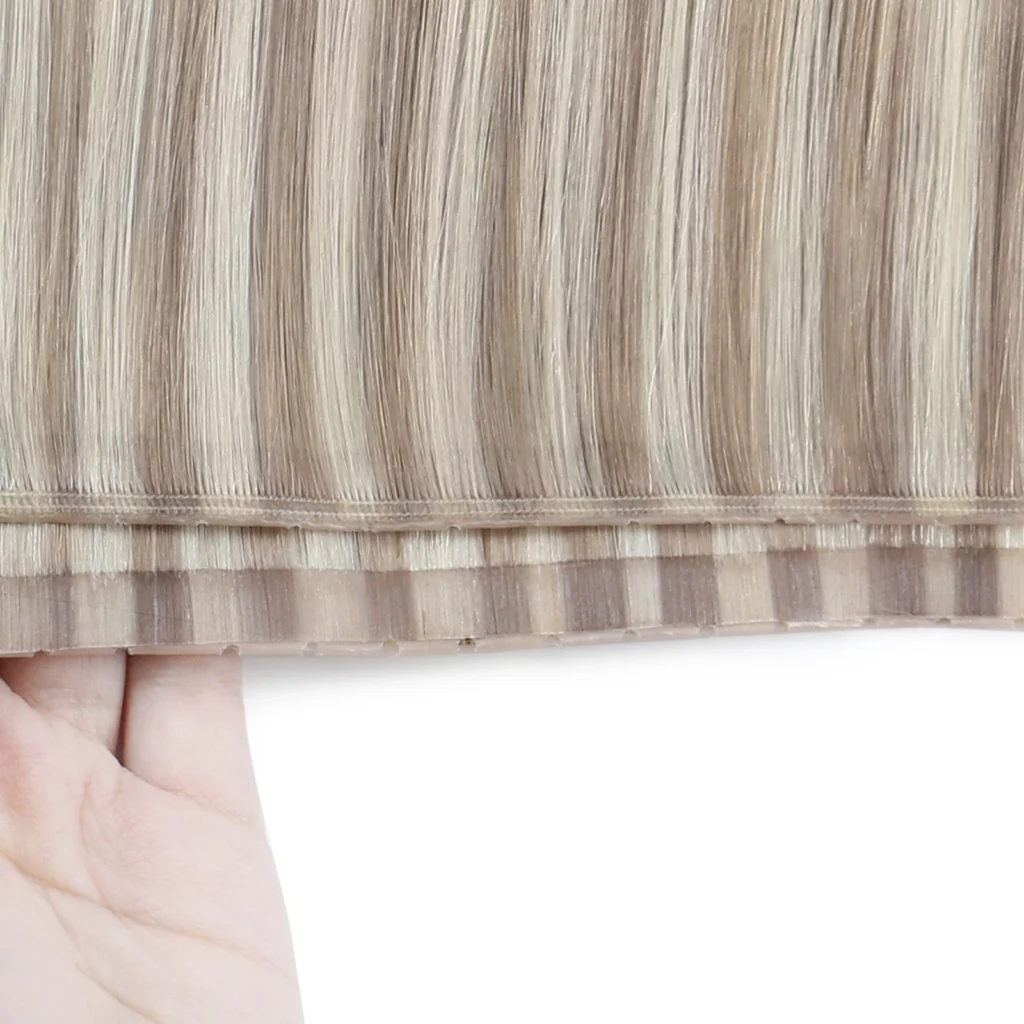
Butterfly Weft is extremely lightweight; it doesn’t require the forceful tightening needed to secure traditional, heavy hair wefts.
Avoid Over-Tightening:
The Pinky Test:
Impact:
Keeping Layers Thin for a Truly Seamless Look
Leverage the advantages of the PU holes to avoid unnecessary stacking.
- Avoid Stacking: Unless the client has extremely thick hair, avoid overlapping two layers of Butterfly Weft in the same location.
- Breathability First: The holes in the Butterfly Weft are designed to allow natural hair to pass through and increase breathability. Stacking two layers blocks these holes, increasing thickness and edge stiffness.
- Seamless Blend: Use a “staggered placement” method to distribute the hair wefts across the head rather than concentrating them in one area, resulting in a very flat feel against the scalp.
Frequently Asked Questions About Butterfly Weft Installation
Why Does It Feel Stiff During the First 48 Hours?
(The new PU material has some shape memory when first unpacked. After the first shampoo or 2-3 days of being warmed by body temperature, the PU material will become softer and perfectly conform to the scalp.)
What signs indicate an improper installation?
(If you still experience stinging or scalp redness after 48 hours, please contact your hairstylist immediately to adjust the tension.)
Get Professional Support from Full Shine


