Full Shine Halo extensions are a high-quality choice for damage-free volume, utilizing 100% Remy (hair with cuticles aligned in the original direction, higher-quality human hair) human hair. However, for users with sensitive scalps, even the 100g or 120g high-density sets may cause mechanical irritation for users with sensitive scalps; monitor for redness or itching after first wear, or even traction alopecia if not fitted correctly. If the weft isn’t balanced correctly, the weight can cause it to sag, leading to friction at the nape of the neck or “local pressure point on the scalp” on the crown.

Key Takeaways
1. Stop hair extensions scalp irritation by stabilizing the weft
While 120g is lightweight compared to a full head of clips, as a single-piece Halo, it can still shift. This movement causes the lace weft to rub against the delicate skin at the base of the skull, leading to redness or itching.
The Benefit
No movement means no friction. The silicone backing ensures the metal doesn’t scrape against your scalp.
The Two-Finger Tension Rule
Adjust your the wire so that you can fit exactly two fingers between the wire and your forehead. This ensures the wire is snug enough not to slip, but loose enough to prevent it from “digging” into the scalp.
Switch to the Elastic Wire
The product often includes a spare elasticized wire. For sensitive users, the elastic option is superior as it stretches with your head movements, significantly reducing static pressure on the crown.
2. Relieve hair extensions scalp irritation through wire adjustment
The “invisible” nylon fishing-line style wire can feel sharp if it’s supporting the full 100g+ weight on a single pressure point.
3. Prevent hair extensions scalp irritation with proper placement
Most friction problems are caused by incorrect placement or insufficient stabilization; check placement first the Halo is placed too high or too low, causing it to “wobble” during movement.
Why it works
The bone acts as a support from the occipital bone (the curved bone at the lower back of your skull
When the 120g weight is supported by your skull structure rather than just the wire, the vertical pull is neutralized, and the friction against your neck skin disappears.
The “Sensitivity Wash”
Before your first wear, use a fragrance-free, sulfate-free shampoo (look for ‘sodium lauryl sulfate’ free) and rinse thoroughly before first wear.. This removes any factory-applied softeners that may irritate sensitive scalps.
Avoid the Roots
When conditioning, only apply product to the mid-lengths and ends. Keeping the lace weft free of oily residue prevents it from becoming slippery or trapping sweat against your skin.
4. Avoid hair extensions scalp irritation with pre-wear hygiene
Itching can sometimes be caused by the “new hair” coating or storage residues rather than the extension itself.
Sensitivity Analysis: Weights
| Product Weight | Best For | Sensitivity Risk | Pro-Tip for Comfort |
| 50g – 70g | Fine hair/Highlights | Very Low | Standard nylon wire is usually fine. |
| 80g – 100g | Natural Volume | Moderate | Use the elastic wire for all-day wear. |
| 120g (Max) | Maximum Thickness | Higher | Must use clips to prevent sagging/friction. |
Summary for Users
To enjoy the premium volume of a 120g the Halo without irritation:
- Anchor the weft with the included silicone clips to stop friction.
- Adjust the wire using the two-finger rule for a “tension-free” fit.
- Position the piece under the occipital bone (the curved bone at the lower back of your skull) to distribute weight.
- Cleanse the hair before use to remove potential irritants.
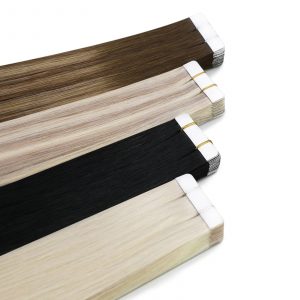
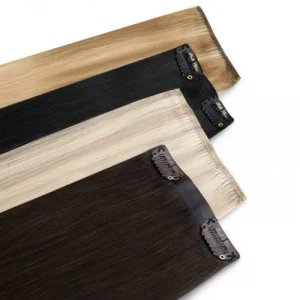
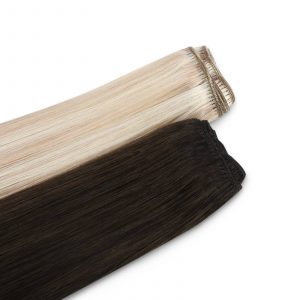
Other Types of Hair Extensions
“Hey there! I’m Alaia, a hair extension enthusiast and educator who tests practical, budget-friendly styling tips. For me, it’s not about hiding who I am, but about amplifying my confidence in just five minutes. I’m all about finding those little tricks to bring joy and ease to our busy lives. Think of me as your trusted resource for realistic, affordable, and totally achievable hair inspiration. Let’s embrace the fun of transforming our look and feeling fabulous, just for us!”
Frequently Asked Questions
-
Why Halo Hair Piece Won’t Stay in Place
Halo hair extensions are loved for a reason—they’re quick, damage-free, and incredibly beginner-friendly. Instead of clips or glue, a transparent […]
-
Buy New Halo Hair Extensions: Signs It’s Time
If you’ve been wearing your halo hair extensions for a while, you might be asking: How do I know when […]
-
Washing Halo Hair Extensions: A Complete Step-by-Step Guide
Halo hair extensions are a quick and easy way to add volume and length to your natural hair. To keep […]


