For those with tape-in extensions, achieving a perfect color match is a common desire. However, the process of altering the shade of your extensions is fraught with technical challenges.
While you might be tempted to reach for a box of dye to unify your natural hair with your extensions, it is crucial to understand the specific Risks of Dyeing Tape Hair. Unlike your natural strands, tape-ins have undergone industrial processing and feature a critical adhesive component. Before you consider changing your color, here is a professional guide to the risks involved, ensuring your investment in both your hair and your extensions remains safe.
1. The Chemistry of “Can’t”: Stubborn Cuticles and Uneven Color
One of the primary Risks of Dyeing Tape Hair lies in the hair itself. High-quality, Remy human hair extensions are often pre-colored or treated with a protective outer layer (the cuticle) to maintain shine and longevity. This means the hair has already been chemically processed, which changes its porosity .
Because of this pre-processing, extensions rarely react to dye the same way your natural hair does.
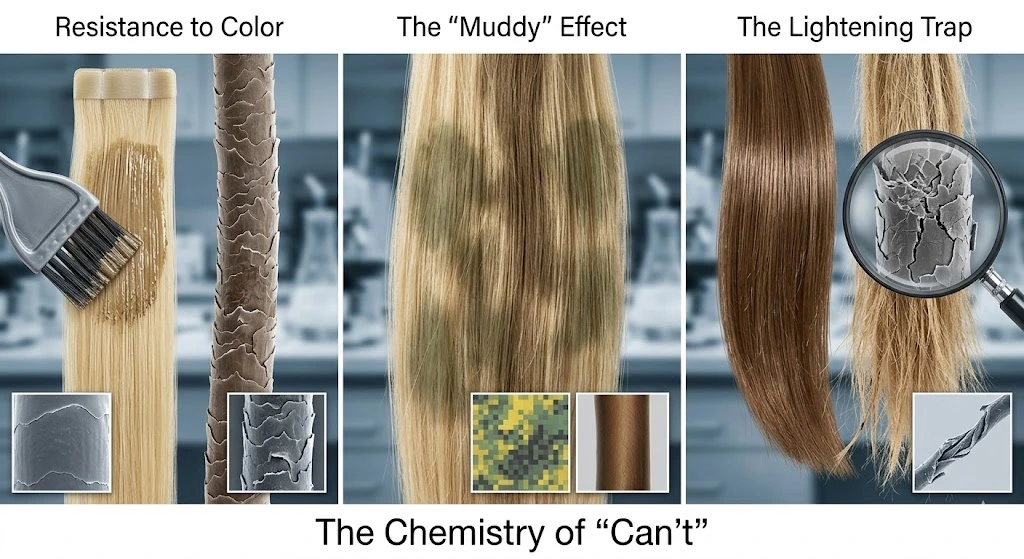
- Resistance to Color: The extensions may resist the new pigment, resulting in a shade that is lighter or completely different from what you applied to your roots.
- The “Muddy” Effect: Color can absorb unevenly, leading to patchy results or unwanted undertones (like greenish or muddy browns) that signal a failed DIY job .
- The Lightening Trap: You can often dye extensions darker, but you cannot easily lift the color to a lighter shade. Attempting to use bleach is highly dangerous and can turn the hair into a dry, brittle, “straw-like” texture that is beyond repair .
2. Adhesive Apocalypse: The Danger to the Tape Tab
The most critical structural difference between your natural hair and tape-ins is the adhesive strip. This medical-grade bond is designed to adhere to your bio hair, but it is highly sensitive to chemicals found in hair dye and developers.
When you are considering the Risks of Dyeing Tape Hair, the potential for bond failure is the highest financial risk.

- Chemical Weakening: Hair dye, particularly the alkaline agents in permanent color, can soften, dissolve, or weaken the polyurethane-based adhesive . Even if you avoid the tab, creeping moisture can compromise the integrity of the bond.
- Premature Slippage: If the adhesive is damaged, your extensions will begin to slide out, slip down the hair shaft, or fall out entirely long before their scheduled maintenance appointment .
- Invisible Tape Vulnerability: With “invisible” or ultra-thin tape-in extensions, the hair is often injected directly into the adhesive. Dyeing near this area is extremely dangerous, as the chemicals can directly break down the bond from the inside out .

- Accelerated Processing: Extensions absorb dye much faster than natural hair. If left on for the standard time (30-45 minutes), you risk “over-processing,” which leads to dryness, brittleness, and matting .
- Loss of Softness: The silky, natural feel of Remy hair comes from intact cuticles. Chemical processing can raise these cuticles, causing the hair to tangle, feel rough, and lose its natural luster .
- Thermal Shock: If you attempt to dye installed extensions and then use heat styling to dry them, you combine chemical stress with thermal stress, which can drastically reduce the tensile strength of the hair fibers .
4. Professional Verdict: Is It Ever Safe?
Given the significant Risks of Dyeing Tape Hair, the safest approach is often strategic avoidance. Instead of dyeing the entire set to match your current color, industry professionals recommend a different approach:
Conclusion
While the desire for a seamless blend between your natural hair and your tape-ins is understandable, the path to achieving it should not involve compromising the integrity of your investment. The Risks of Dyeing Tape Hair—from uneven color and muddy tones to complete adhesive failure and irreversible dryness—are substantial.
At Full Shine, we believe in providing premium, ethically sourced human hair that maintains its beauty without risky chemical experimentation. We recommend consulting with a professional colorist who specializes in extensions and, when possible, opting to purchase the correct shade rather than attempting to alter the one you have. Your hair—and your wallet—will thank you.
Contact Us


